
Open platform for intelligent labs

Build the autonomous scientist on top of modern lab operations.

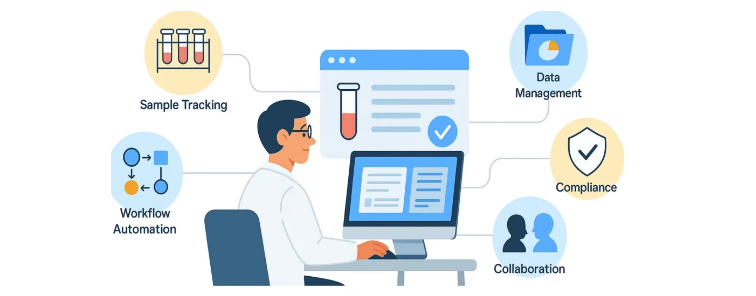
LabABLE is an AI-native open platform for laboratories, built on the operational foundation labs need today: sample tracking, audit logging, data parsing, workflow automation, reporting, dashboards, and integrations. From that foundation, it expands into shared tools, AI agents, collaborative workflows, and a more intelligent lab environment designed for continuous improvement.

What sets LabABLE apart is not only the lab operations layer, but the open platform on top of it: a place to adapt tools, share workflows, exchange data structures, publish templates, refine processes, capture knowledge, strengthen communication, and deploy agents that help labs move from manual work toward autonomous scientific execution.

Connected intelligent lab
Core foundation + open platform vision

Start with operational control. Scale into a shared, agentic lab platform.

LabABLE can overlay existing LIMS first, then expand into a deeper platform role. Labs can start in plugin mode with core tools today, while building toward reuse, collaboration, extensions, and autonomous research workflows.

Operational foundation for modern laboratories

Built for the lab realities that drive trust, compliance, and throughput: sample registration and lifecycle tracking, audit logs, QC alerts, report generation, chain of custody, no-code automation, and secure permissions.

Sample trackingRegistration, barcode generation, location history, and immutable sample records.
Audit loggingTraceability for actions, workflows, approvals, and operational events.
Data parsing & QCCSV, Excel, and JSON ingestion with validation, QC thresholds, and alerts.
Workflow automationDrag-and-drop workflows, templates, execution steps, and reporting outputs.

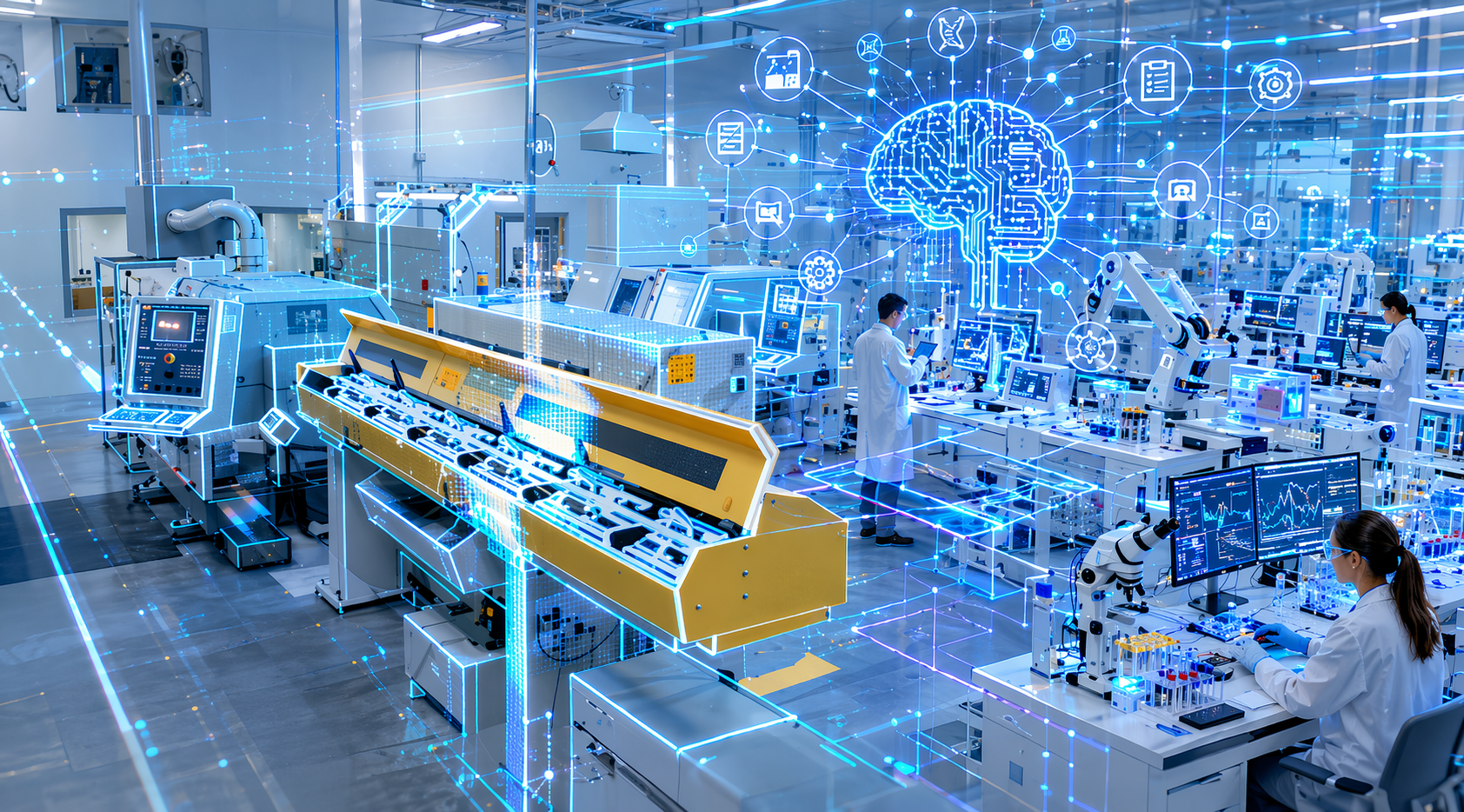
Integration layer

Connect instruments, databases, ELNs, CRMs, REST endpoints, file drops, and existing LIMS without forcing a rip-and-replace move.

Schema translators

Unify data across lab systems with configurable mappings and an open, extensible platform approach.

Reproducibility

Version workflows, protocols, dashboards, and outputs so teams can track changes, lock validated versions, and preserve provenance.

Communication layer

Clarify ownership, handoffs, alerts, approvals, and review loops so labs can coordinate around shared work instead of disconnected tools.

Use it as a toolkit

Adopt specific tools, dashboards, or agents first with minimal workflow disruption.

Use it as an overlay

Connect into existing LIMS environments and extend them with automation, visibility, and intelligence.

Use it as a platform

Grow into a shared operating layer for data, workflows, tools, protocols, knowledge exchange, and autonomous labs.

Open platform and sharing

Where labs can adapt, share, and compound knowledge.

The bigger vision is a platform where laboratories do not just use features, they improve and share them. Labs can tweak tools, clone workflows, publish templates, exchange processes, reuse knowledge, and distribute AI-powered improvements across teams and sites.

Global connected network

Shared workflows

Create, clone, version, and distribute workflow templates for repeatable operations and faster onboarding.

Shared tools

Publish dashboards, protocol builders, automation steps, and utility modules that others can adapt to their own lab context.

Knowledge exchange

Turn past protocols, results, and decisions into reusable context that supports future work instead of sitting dormant in storage.

Data sharing models

Enable structured sharing, configurable schemas, and safer collaboration patterns across teams, labs, and integrations.

Autonomous Scientist + AI agents

From assisted workflows to autonomous scientific execution.

LabABLE is designed to evolve from a lab operating layer into an Autonomous Scientist Platform where specialized agents coordinate research planning, evidence gathering, hypothesis generation, experiment design, interpretation, critique, and reporting.

Connected intelligent laboratory
Low autonomy

Assists with next steps

Supports researchers with drafts, recommendations, task suggestions, and workflow guidance while humans remain tightly involved.

Medium autonomy

Executes bounded workflows

Runs literature review, structured analysis, draft experiment plans, and sandboxed tasks with human oversight.

High autonomy

Manages closed research loops

Coordinates long-running research programs, reprioritizes steps, and escalates only ambiguous or higher-risk decisions.

Research Planner + Literature Agent

Translate objectives into milestones, gather evidence, rank sources, and synthesize what matters for the next step.

Hypothesis + Experiment Design Agents

Generate candidate mechanisms, compare competing models, build controlled experiments, and define metrics and ablations.

Data Analyst + Verifier

Interpret results, surface anomalies, challenge assumptions, resolve contradictions, and improve reliability through critique loops.

Autonomous Scientist Orchestrator

Composes the agent stack into a governed, multi-step system that can design, execute, interpret, and optimize experiments end to end.

Feature set

Feature depth across operations, integrations, agents, and governance.

The product vision combines the operational essentials labs expect with the extensibility, sharing, and intelligence layers legacy systems usually do not offer.

Lab feature set illustration

Dashboards, alerts, and visibility

Role-based views for pending work, QC failures, sample bottlenecks, instrument issues, and operational throughput.

Protocol generation and versioning

AI-assisted protocol drafting, editable structures, review routing, history tracking, and reproducibility controls.

Instrument and inventory agents

Monitor reagent status, calibration events, local exports, and operational anomalies while linking them back to the audit trail.

Permissions and compliance

Role-based access, approval flows, audit exports, version control, secure boundaries, and deployment modes for different lab needs.

Marketplace-style extension model

Enable shared agents, dashboards, automations, and protocol templates that can be rated, cloned, customized, and redeployed.

Overlay or replace over time

Labs can start as an augmentation layer on top of current systems and expand into a primary platform when ready.

Build the intelligent lab

Start with the tools labs trust. Grow into the open platform they cannot find elsewhere.

LabABLE combines operational control, open integrations, reusable workflows, shared knowledge, AI agents, and a path toward autonomous scientific execution.

Platform highlights

Platform advantages at a glance.

LabABLE combines trusted lab operations with an open, extensible platform that becomes more useful as teams share workflows, adapt tools, connect systems, and add new layers of intelligence.

Open by design

Not just configurable, but built for reusable workflows, exchangeable modules, data mappings, and lab-specific adaptation.

AI agents with governed autonomy

Specialized agents can support or orchestrate research workflows with human review, escalation paths, and traceability.

Foundation labs can trust

Operational controls, auditability, QC, permissions, and reporting support the transition from manual workflows to smarter systems.

Designed for overlays and migration

Use it alongside legacy environments first, then expand into a deeper platform role when the lab is ready.

Marketplace and sharing dynamics

Shared templates, tools, dashboards, and agent patterns create compounding value instead of isolated feature usage.

Health-tech and diagnostics fit

The experience is built for labs that need a modern interface while still supporting governance, instrumentation, traceability, and diagnostic workflow rigor.